
Billi Media
How Filtered Water Enhances Taste In Home Cooking
You can buy the freshest vegetables, use artisan pasta, even splurge on organic eggs, and still find your meal falling flat. There’s a reason home cooking sometimes doesn’t deliver the flavour you expected, and it’s not always your ingredients or technique. Often, it can be your water.
Water is the most overlooked ingredient in the kitchen. It boils, simmers, steams, extracts and hydrates. It is absorbed into your food and beverages, yet few people consider how its quality affects the outcome. If your water carries impurities, sediment, or other chemical traces that influence doesn’t disappear during cooking, it transfers.
Learn how high-quality filtered water improves flavour, texture and consistency in everyday meals and drinks. Backed by decades of expertise in water filtration, Billi NZ knows the difference that better water makes.
What’s Hiding in Your Tap Water Affects More Than You Think
New Zealand’s municipal tap water is among the safest globally, but safety doesn’t equal purity. Most water suppliers use chlorine to disinfect mains water lines, which can produce a noticeable taste or odour, particularly when the water is heated. You may not realise it, but you’re often cooking in water that’s chemically treated to kill bacteria, not to enhance flavour.
In some households, especially those with older plumbing or located in rural zones, water may also carry fine sediment, heavy metals, or microbial cysts such as giardia or cryptosporidium. These substances aren’t necessarily harmful in low concentrations, but they can interfere with both flavour and food safety.
- Chlorine: Adds bitterness and suppresses the natural flavours of vegetables and grains.
- Sediment: Can cause cloudiness in broths and stews and affect the texture of rice or pasta.
- Cysts: Do not influence taste but pose hygiene concerns, especially for children and vulnerable family members.
- Metal traces: Can impart a subtle metallic note when boiling or steaming.
Learn more about removing chlorine and other chemicals from your water
Cooking with Filtered Water Makes a Noticeable Difference
Filtered water doesn’t just make drinks taste better, it transforms how your food behaves and tastes during cooking. From start to finish, filtered water prevents interference from residual chemicals and ensures cleaner, more consistent results.
- Boiled vegetables: Retain their colour and natural sweetness, without the muted or ‘chemical’ undertone.
- Rice and pasta: Absorb water during cooking, so clean, neutral water avoids transferring off-notes.
- Soups, sauces and grains: Taste more balanced when water is not competing with or masking other ingredients.
- Tea and coffee: Brew cleaner, with reduced bitterness, improved aroma, and no surface film.
Whether you’re steaming greens for a stir-fry or making a morning coffee, the improvement is immediate and repeatable.

Why Billi Filters Are Built for Better Taste and Health
Billi’s high-performance 0.2 Micron Fibron XC filter is engineered for kitchens where both purity and taste matter. Unlike standard granular carbon filters, Billi’s Fibron X technology uses a high-efficiency activated carbon fibre that removes unwanted taste and odour compounds, cysts (such as giardia and cryptosporidium), and more. This level of filtration ensures water is not only safe but optimised for culinary and beverage use.
Billi systems are manufactured in Melbourne and meet ISO-9001, ISO-14001 and ISO-45001 certifications. They’re also backed by Global GreenTag and WELL Building Institute accreditation.
Everyday Meals That Taste Better with Filtered Water
The benefits aren’t theoretical, they’re evident in everyday meals:
- Morning tea or espresso: Less bitterness, no chlorine aftertaste, more nuanced flavour.
- Mid-week pasta: Tastes cleaner and more vibrant when cooked in neutral water.
- Steamed vegetables: Stay crisp, with a brighter colour and no sulphurous notes.
- Homemade soups and sauces: Develop purer flavours and retain aroma longer.
Even baking benefits: when water quality is controlled, bread, pastries and doughs yield more predictable textures and rises.
Explore how Billi’s boiling and sparkling water taps help in cooking
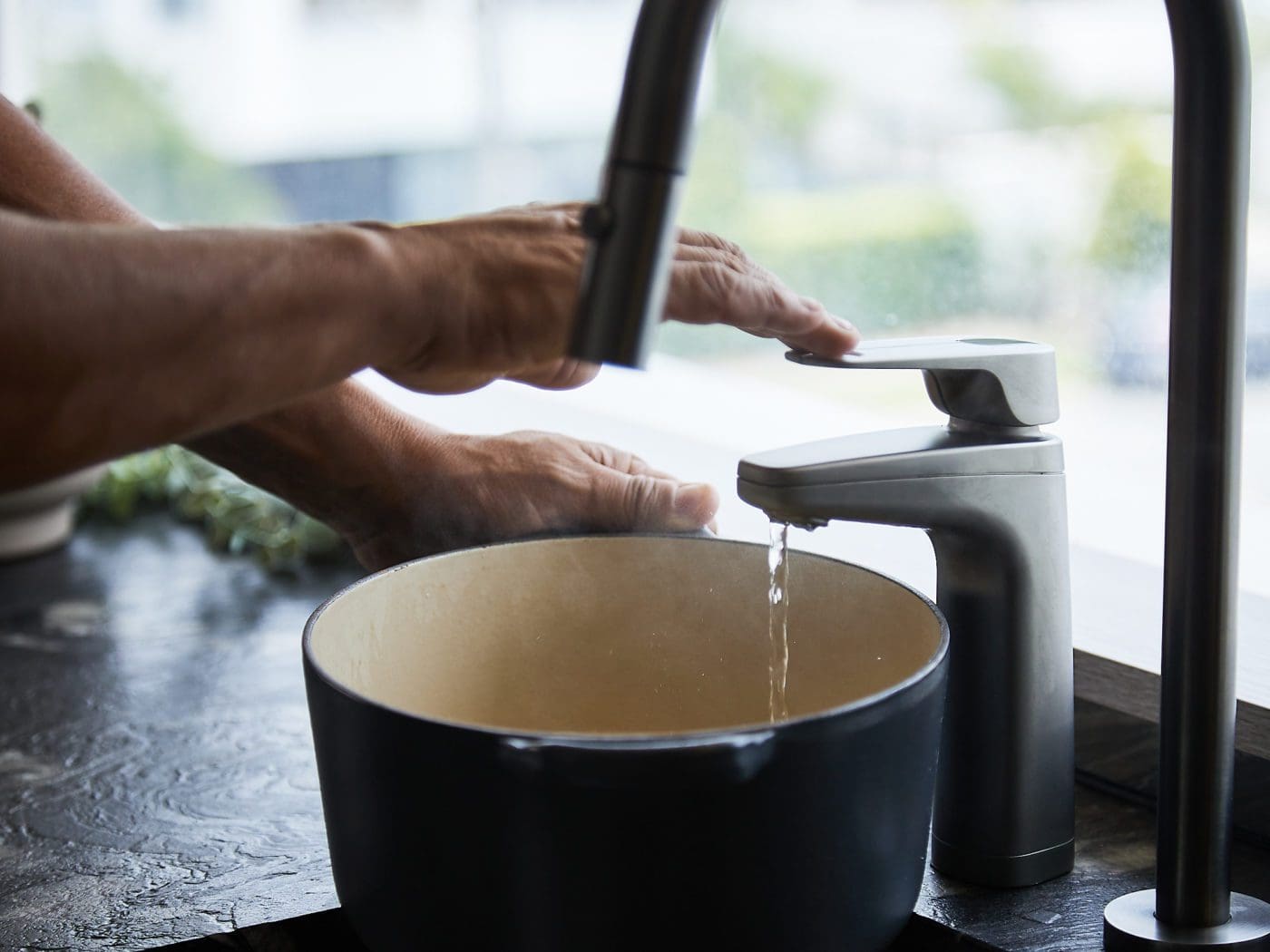
Is Tap Water Really That Bad, or Are We Just Being Particular?
Many households ask the same question: “Is tap water really that bad?” The answer is, it depends on what you expect from it.
For drinking, New Zealand’s tap water is safe. But safety doesn’t guarantee optimal flavour or consistency. For food lovers and home cooks, water is an ingredient. And just like you wouldn’t cook with old oil or stale flour, it’s reasonable to want your water to support rather than suppress your ingredients.
Billi systems are a low-effort, high-impact solution. The compact, underbench design fits most kitchens, and filters can be changed hygienically without tools. Each filter lasts up to 30,000 litres, with optional service support available.
Read our FAQs on water filter installation
Why Filtered Water Belongs in Every Modern Kitchen
Filtered water isn’t about fear, it’s about flavour. It’s about knowing that the base of your soup, your cup of tea, your pasta isn’t compromised by what comes out of the tap. See how Billi fits into your kitchen.