Billi Media
Specifying Commercial Hydration with Water-Cooled Heat Exchange Technology
Designing modern commercial office spaces, multi-storey corporate headquarters, and institutional facilities requires balancing demanding spatial constraints, thermal loads, and energy performance within high-density joinery. Commercial kitchenettes and break-out areas are no longer treated as secondary utility zones; they are central features of workplace wellness and spatial efficiency. However, integrating high-capacity underbench drinking water systems into bespoke joinery presents significant engineering hurdles for architects, mechanical engineers, and builders.
Traditional air-cooled underbench systems impose severe limitations on commercial joinery design and HVAC performance:
- Cabinet Heat Buildup: Operating air-cooled compressors expel substantial convective heat directly into enclosed underbench cabinetry. In unvented joinery, cabinet temperatures can exceed ambient room levels by 10°C to 15°C, degrading chilling performance, increasing energy consumption, and subjecting surrounding joinery materials to thermal stress.
- Joinery Cutouts and Aesthetics: To prevent thermal lock-up, air-cooled systems mandate exterior ventilation grilles, door cutouts, or cooling fans. These mandatory cutouts compromise architectural joinery aesthetics, create dust accumulation traps, and increase fabrication costs for cabinetmakers.
- Acoustic Distraction: Internal ventilation fans and high-duty cycle air-cooled compressors generate continuous background noise, disturbing quiet workplace environments and open-plan office layouts.
- Spatial Inefficiency: Air-cooled units require extensive cabinet clearances (often requiring up to 0.5 m³ of dedicated cupboard space), severely reducing available storage in space-constrained kitchenettes.
Overcoming these integration barriers requires a shift in specification strategy. Specifying a commercial water-cooled drinking water system from the Billi Commercial Range eliminates cabinet heat accumulation and joinery ventilation cutouts, establishing a superior benchmark for modern commercial kitchenette design.
Thermodynamics of Water-Cooled Heat Exchange and Energy Reclaim
Central to advanced commercial hydration is our proprietary heat exchange energy reclaim technology. Rather than expelling thermal energy into the cabinet ambient air as waste, water-cooled systems harvest excess heat generated during the refrigeration cycle and convert it into a valuable thermal resource.
Technical Mechanism of Thermodynamic Energy Reclaim
When chilling water, a refrigeration compressor absorbs heat from the chilling reservoir. In conventional systems, this heat is dissipated via air-cooled condenser coils into the surrounding cabinet. Our water-cooled systems re-route this waste thermal energy through an integrated water-to-water heat exchanger. Incoming mains water destined for the boiling tank passes through this heat exchanger, absorbing waste heat from the chilling process. As a result, incoming supply water is preheated prior to entering the boiling chamber, drastically reducing the electrical energy required to achieve boiling temperatures.
Thermal Conduction Superiority: Water vs Air
From a thermodynamic standpoint, liquid water possesses a thermal conductivity approximately 24x greater than that of ambient air, accompanied by a significantly higher volumetric heat capacity. Water cooling provides rapid, highly efficient heat dissipation from the compressor circuit, maintaining consistent operating temperatures regardless of ambient cupboard condition:
- Consistent Chilling Performance: Under heavy commercial usage, air-cooled compressors experience thermal degradation as cabinet temperatures rise. Water-cooled heat exchangers maintain a stable thermal gradient, ensuring rapid recovery times and sustained chilling efficiency.
- Reduced Electrical Power Consumption: Preheating boiling supply water via reclaimed waste heat directly lowers total kWh electrical consumption per litre dispensed, contributing directly to commercial building energy efficiency goals.
- Extended System Lifecycle: Operating under lower thermal stress extends compressor longevity and reduces mechanical wear, lowering total cost of ownership (TCO) across facility lifecycles.
Operational Capabilities of the Billi Quadra Specification Range
The Billi Quadra Systems range exemplifies this thermodynamic advantage, delivering high-volume boiling and chilled performance within a compact unit footprint. Unlike conventional systems that require auxiliary booster units to handle peak corporate demand, Quadra units deliver greater boiling water drawdown capacity from a single compact underbench unit.
| Quadra Model | User Capacity | Boiling Cups/Hr | Chilled Cups/Hr | Electrical Supply |
| Quadra Compact | Up to 20 | 100 | 150 | 10 Amps |
| Quadra 420 | Up to 25 | 120 | 175 | 10 Amps |
| Quadra 440 | Up to 40 | 150 | 175 | 10 Amps |
| Quadra 460 | Up to 60 | 180 | 175 | 10 Amps |
| Quadra 4100 | Up to 100 | 250 | 175 | 15 Amps |
| Quadra 4180 | Up to 180 | 350 | 175 | 20 Amps |
Joinery Integration, Space Savings, and Zero Cupboard Ventilation
A primary operational requirement for commercial interior designers and joiners is preserving cabinet aesthetics and structural integrity while optimising underbench space. Traditional water dispensers require complex cabinetry modifications that complicate specification and installation.
Elimination of Cabinet Ventilation Grilles and Cutouts
Because our water-cooled system dissipates heat internally through water heat exchange, it operates as a zero ventilation water dispenser. Specifiers can eliminate cabinet door grilles, side louvres, internal cooling fans, and countertop cutouts entirely.
- Aesthetic Integrity: Joinery retains flush, unbroken panel faces without unsightly metal or plastic ventilation grilles.
- Hygiene and Cleanliness: Eliminating louvered doors prevents kitchen dust, grease, and debris from entering underbench storage spaces.
- Silent Operation: Without internal cooling fans or air expulsion noise, the unit operates quietly, eliminating background hum in acoustic-sensitive environments.
- Reduced Joinery Cost: Cabinetmakers save labor hours and material expenses by eliminating complex CNC cutout milling and vent fitting.
Spatial Efficiency: Up to 65% Cupboard Footprint Reduction
In commercial real estate, underbench storage space commands premium value. Conventional air-cooled systems often require massive underbench enclosures and extensive side clearance to allow air circulation. Our underbench units achieve up to a 65% reduction in cupboard footprint compared to conventional air-cooled competitors.
By standardising on a compact unit depth (as thin as 315 mm to 465 mm depending on model capacity), the Billi Quadra underbench unit fits comfortably within standard commercial joinery carcasses, leaving ample room for under-sink drainage, waste separation bins, or additional shelving.
Water-Cooled vs. Air-Cooled Specification
| Specification Parameter | Billi Water-Cooled System | Conventional Air-Cooled System |
| Cabinet Ventilation | Zero ventilation required (no grilles/cutouts) | Mandatory door grilles, cutouts, or fans |
| Cupboard Footprint | Up to 65% space reduction; highly compact | Large cabinet footprint with mandatory clearances |
| Heat Dissipation | Reclaimed via internal water heat exchanger | Expelled directly into cabinet air space |
| Boiling Capacity | Greater initial drawdown (no booster) | Often requires separate auxiliary booster units |
Contractor Installation and Commissioning Features
For builders and hydraulics contractors, our water-cooled systems incorporate self-commissioning setup logic that automatically calibrates boiling points based on elevation and ambient pressure. Flexible mounting configurations allow position placement away from traditional sink drain points when paired with matching fonts and drain risers.
Environmental Certification and Rating Tool Compliance
In modern commercial project delivery, sustainability assertions must be backed by rigorous, third-party verified environmental credentials. Our commitment to verifiable sustainability ensures direct alignment with major environmental rating tools across Australia, New Zealand, and international jurisdictions.
Global GreenTag Gold LCARate Standard 4.0 & EPD Certification
Our systems are independently certified under the GreenTag Gold certified water system protocol. Specifically, the Billi Quadra and Quadra Plus series hold Gold Level certification under the Global GreenTag LCARate standard 4.0, supplemented by an Environmental Product Declaration (EPD) compliant with EN 15804.
This Life Cycle Analysis (LCA) verification covers full cradle-to-grave environmental indicators, including embodied carbon, greenhouse gas emissions, water footprint, and supply chain social responsibility. Details can be reviewed under our Sustainability Commitments.
Compliance Matrix for Green Building Rating Tools
Specifying water-cooled drinking water systems contributes toward achieving credits across major commercial building environmental standards:
- Green Star Australia & New Zealand: Earns points under Sustainable Products, Life Cycle Assessment, and Energy Efficiency categories.
- LEED® & BREEAM®: Contributes directly to Energy & Atmosphere (EA) and Materials & Resources (MR) credits via third-party EPD and GreenTag Gold documentation.
- NZ Homestar® & IS® Rating: Aligns with sustainable product selection and material transparency criteria.
- WELL Building Standard®: We have been a Cornerstone Member of the International WELL Building Institute (IWBI) since 2019 and hold Works with WELL product certification. Our systems satisfy WELL v2 Water Concept features regarding fundamental water quality, drinking water promotion, and hygiene.
Health, Safety, and Ecotoxicity Standards
Beyond carbon and energy performance, we prioritise user health and material safety:
- Zero VOC Emissions: All underbench units and fluid pathways contain zero volatile organic compounds (VOCs).
- BPA-Free Construction: Water contact components are 100% Bisphenol-A (BPA) free.
- Stainless Steel Fluid Paths: In advanced ranges such as OmniOne, internal copper piping is replaced with high-grade stainless steel for enhanced water purity.
- Regulatory Compliance: Systems comply with WaterMark certification (WM-21525, AS/NZS 3498, AS/NZS 4020 for potable water safety) and HACCP PE-972-WAT-1-02 hygiene standards.
Specifying underbench commercial hydration systems requires evaluating energy reclaimed, spatial footprint, acoustic output, and environmental certification. Our commercial water-cooled drinking water system resolves traditional joinery and HVAC trade-offs by combining heat exchange energy reclaim technology with zero cupboard ventilation requirements, compact underbench units, and Global GreenTag Gold certification.
Specification Tools for Architectural & Engineering Teams
We provide comprehensive digital tools and technical advisory services to streamline the specification and design workflow for commercial specifiers:
- BIM & CAD Document Library: Downloadable Revit, ArchiCAD, and CAD block files for seamless BIM integration and spatial clash detection.
- SPEC Generator (BSPEC): An automated online specification platform that generates customised architectural spec sheets, plumbing schedules, and electrical requirements in minutes.
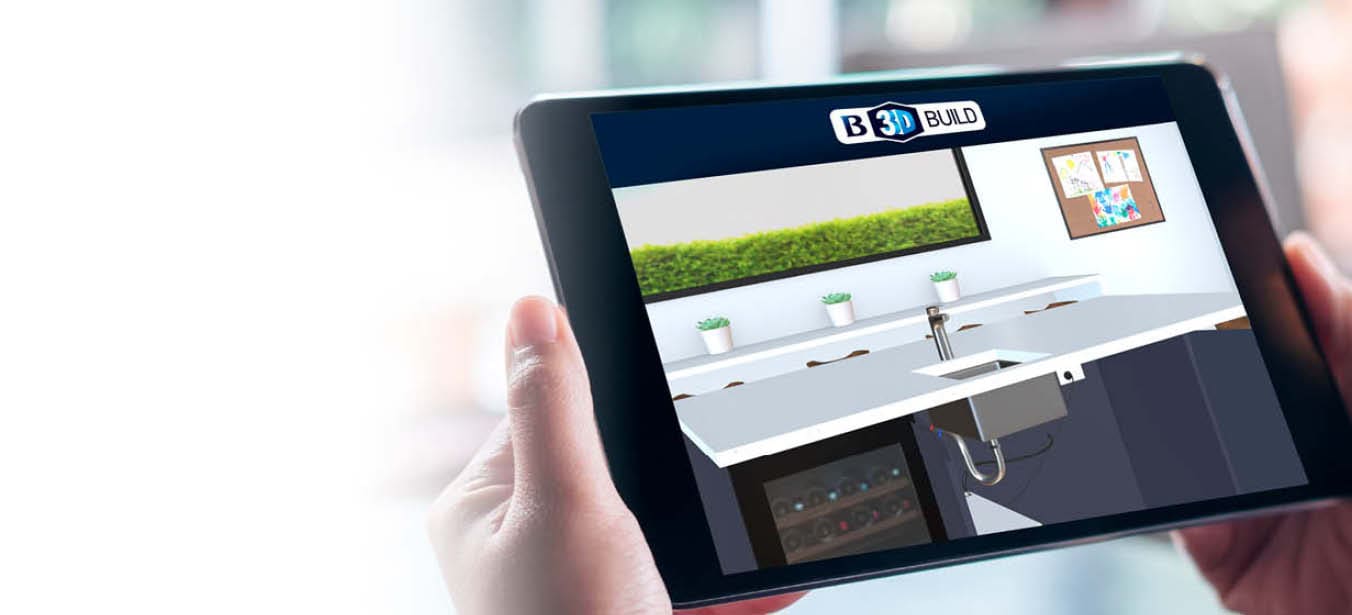
- 3D Build: An interactive mobile 3D visualisation tool that simulates tapware finishes, fonts, and underbench configurations in staged kitchenette environments.
- Nationwide Service Network: Nationwide accredited service technicians providing programmed maintenance, filter management, and technical support across Australia and New Zealand.
Download BIM/CAD models or Quadra specifications using the SPEC Generator, schedule a technical consultation for your commercial project, or contact the Billi NZ team today.