Billi Media
Hydration Is Becoming an Employee Retention Feature in Modern Offices
Employee expectations of the workplace have changed.
For many organisations, the office is no longer competing with another office across town. It is competing with home. Employees who have experienced greater flexibility now place more value on the quality of their workplace environment, and businesses are responding by rethinking what the office should offer.
Workplace experience has become part of conversations about talent attraction, employee engagement and retention. While leadership, culture and career development remain central to those discussions, the physical environment continues to shape how employees feel about where they work.
One area receiving growing attention is workplace hydration (How Hydration Fuels Workplace Success). Access to convenient, high-quality drinking water is becoming part of a broader shift towards hospitality-inspired office environments that prioritise wellbeing, comfort and work performance.
Why Employee Experience Has Become a Business Priority
Organisations are recognising that employee experience influences how people engage with their workplace, how often they choose to use the office and how they perceive the organisation as a whole. As hybrid working models continue to shape expectations, businesses are looking for ways to create workplaces that offer genuine value beyond a desk and a meeting room.
This has prompted investment in areas that were once considered secondary. Breakout spaces have become more inviting, office kitchens are being redesigned, wellbeing initiatives are receiving greater attention, and amenities that support convenience and comfort are becoming more important.
These changes reflect a simple reality. Employees notice the environment around them. The quality of everyday workplace experiences contributes to the overall impression an organisation creates.
Many of these principles are explored in 5 Ways to Increase Productivity in the Office, where workplace design and employee comfort are highlighted as important contributors to effective working environments.
Hydration Alone Does Not Retain Employees
It is important to acknowledge that employees do not stay with an organisation because it installs a new workplace water system. Retention is influenced by a wide range of factors including leadership quality, workplace culture, flexibility, remuneration and opportunities for growth.
However, the employee experience is shaped through hundreds of small interactions in the office each week. The kitchen employees use, the spaces where colleagues connect, the facilities available throughout the day and the overall quality of the workplace all contribute to how people feel about their environment.
Hydration and beverage options are a frequently used workplace amenity that can contribute to a more positive workplace experience when combined with other employee-focused initiatives.
Why Everyday Amenities Shape Workplace Perception
Employees may visit kitchen areas, breakout spaces and beverage stations multiple times throughout the day. These spaces often become informal meeting points where conversations happen naturally and workplace culture is reinforced.
Because employees interact with these areas frequently, they tend to have a disproportionate influence on workplace perception.
A thoughtfully designed kitchen or breakout area can communicate that employee comfort has been considered. Modern facilities can create a sense of professionalism and care. Conversely, outdated amenities can undermine broader efforts to create a positive workplace environment.
Hydration facilities are increasingly becoming part of this discussion. They are practical, highly visible and used regularly by employees across the organisation. This combination makes them particularly relevant to businesses seeking to improve workplace experience.
How Office Hydration Solutions Support Workplace Expectations
Access to drinking water has always been a workplace requirement. What has changed is the level of expectation surrounding convenience, quality and user experience.
Employees increasingly expect workplace amenities to be intuitive, efficient and aligned with modern office environments. This has encouraged many organisations to move away from fragmented kitchen setups and towards integrated workplace water systems.
Modern office hydration solutions can provide:
- Instant boiling water for tea, coffee and food preparation
- Chilled filtered water for everyday hydration
- Sparkling filtered water as a premium workplace amenity
- Ambient filtered water from a single integrated system
These features support a smoother workplace experience while reducing reliance on multiple appliances.
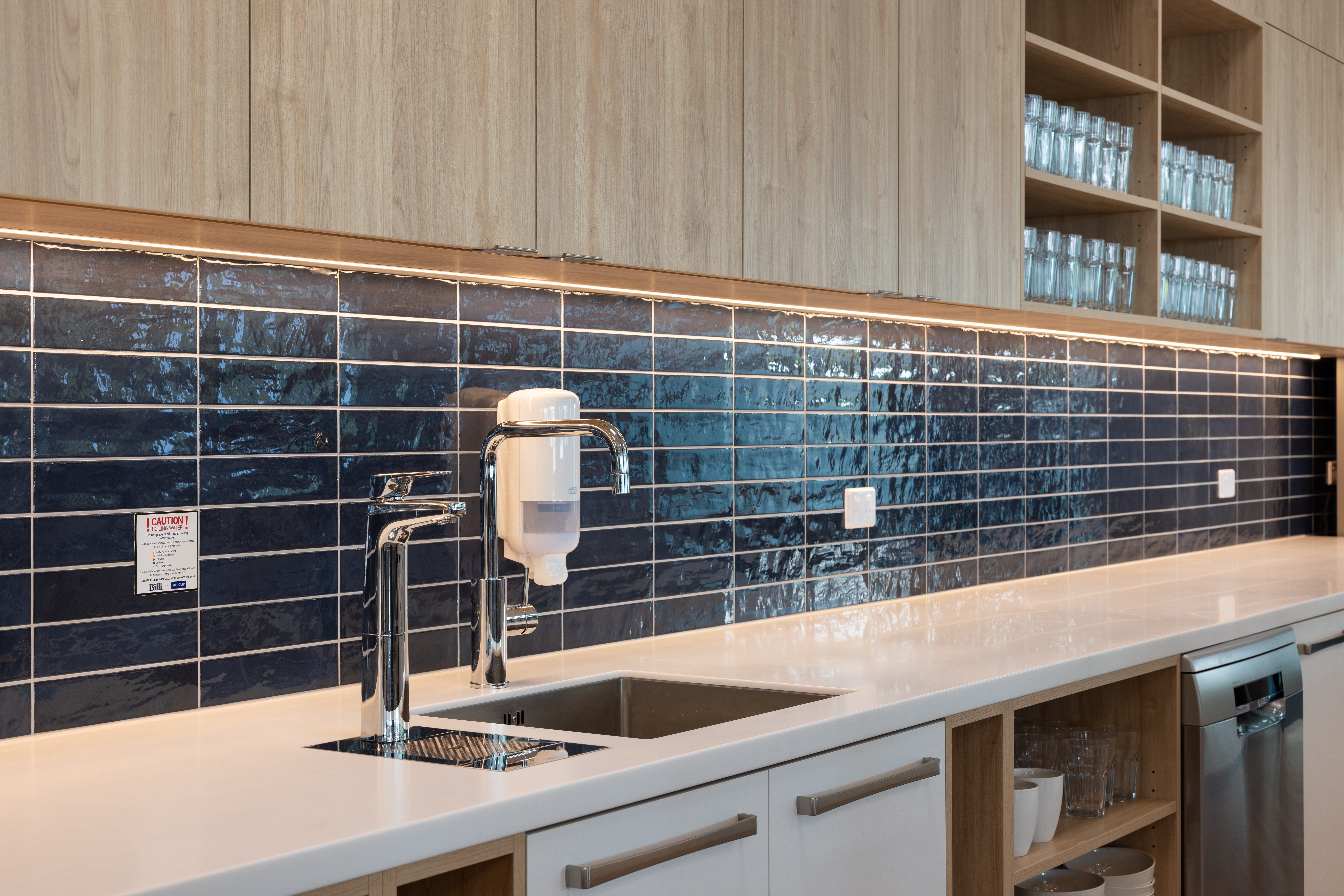
Billi’s commercial systems can provide instantaneous boiling, chilled and sparkling filtered drinking water through space-saving underbench designs suited to contemporary office environments. This allows organisations to support employee convenience without sacrificing valuable kitchen space.
For organisations evaluating options, Commercial Drinking Water Filtration Systems & Dispensers provides further information about workplace water system solutions.
Creating Hospitality-Inspired Office Kitchens and Breakout Spaces
Many of today’s most desirable workplaces borrow ideas from hospitality environments.
Premium hotels, cafés and modern shared workspaces have influenced expectations around comfort, convenience and design. As a result, office kitchens are increasingly being viewed as an extension of workplace culture rather than purely functional spaces.
This shift is particularly important in hybrid work environments. When employees choose to come into the office, the quality of the experience matters. Comfortable communal spaces encourage interaction, support collaboration and help create a stronger connection to the workplace.
Hydration naturally plays a role within these environments. The ability to access chilled, sparkling and boiling filtered water from a single integrated system contributes to a cleaner and more streamlined experience. Employees benefit from greater convenience while organisations create spaces that feel more contemporary and welcoming.
Design also matters. Modern dispenser finishes and integrated installations can complement broader office fit-outs while reducing visual clutter within shared spaces.
For organisations considering office kitchen upgrades, hydration can become a practical improvement that supports both function and workplace experience.
Replacing Outdated Workplace Water Setups
Many workplace hydration setups were designed for offices with very different expectations.
While older solutions may still provide access to drinking water, they can create challenges relating to aesthetics, storage, convenience and sustainability.
Modern workplace water systems offer a more integrated approach.
| Traditional Workplace Setup | Modern Workplace Water System |
| Separate appliances for different functions | Multiple water options from one integrated system |
| Additional storage requirements | Compact underbench installation |
| Limited beverage choices | Boiling, chilled, sparkling and still filtered water |
| Greater visual clutter | Cleaner, contemporary design |
For organisations already reviewing workplace facilities, hydration upgrades can provide a visible improvement that employees interact with every day.
Supporting Sustainability Goals While Improving Workplace Experience
Sustainability is becoming an increasingly important consideration for both organisations and employees.
Many businesses are looking for practical ways to reduce waste, improve resource efficiency and demonstrate environmental responsibility. Employees are often paying attention to these efforts as part of their broader perception of workplace values.
Workplace hydration can support these objectives.
Reducing reliance on bottled water can help minimise waste while supporting initiatives aimed at eliminating single-use plastics. Integrated workplace water systems can also contribute to cleaner and more efficient workplace operations.
Billi has a long-standing commitment to sustainability and environmental responsibility. Our water-cooled systems incorporate heat exchange and energy reclaim technology designed to improve efficiency. Select products have also achieved Global GreenTag certification (Quadra units only), and we maintain active involvement with healthy building and sustainability initiatives.
What To Consider When Upgrading Workplace Water Systems
Every workplace has different requirements, which makes system selection an important part of the decision-making process.
Before upgrading workplace water systems, organisations should consider:
- The number of employees who will use the system
- Whether boiling, chilled, sparkling or still water is required
- Available underbench space
- Energy efficiency considerations
- Ongoing maintenance requirements
- Hygiene features and filter management
- Compatibility with office design and fit-out plans
Space-saving design is often a key consideration. Workplace kitchens frequently have limited storage capacity, making compact underbench systems particularly valuable.
Billi systems are designed with space-saving footprints, and water-cooled models do not require cupboard ventilation, helping organisations maximise usable space within workplace kitchens.
Hygiene should also form part of the evaluation process. Features such as filter replacement reminders and digital lockout functionality can help support ongoing maintenance and water quality management.
Enquire Today to Upgrade Your Office Hydration
For organisations planning office upgrades or reviewing staff wellbeing initiatives, hydration is worth considering as part of a broader workplace experience strategy.
Learn more about Billi’s commercial workplace solutions, view our range, or contact our team to discuss a workplace water system designed for your office environment.