Billi Media
How Filtered Water Enhances the Flavour of Coffee
You can buy better coffee beans, you can improve your grinding, or you can adjust the brew time, yet some mornings your coffee still tastes slightly sharp, faintly chemical, or flatter than it should. When that happens, the issue is rarely your technique, it is more often the water.
Most home coffee drinkers focus on extraction variables. Few consider what is flowing through the coffee grounds in the first place. But water forms the foundation of every cup and if it carries its own taste, your coffee will carry it too.
Understanding how filtered water supports flavour is not about overcomplicating your process. It is about removing what interferes with it.
Tap Water Is Safe but Not Designed for Brewing Perfection
New Zealand’s municipal water is treated to meet public health standards. That is essential, but flavour is a separate objective.
Water is commonly disinfected with chlorine. While necessary for safety, chlorine can contribute to taste and odour. In a glass of water, that may be mild. In coffee, where subtle aromatics and acidity define the profile, even slight interference can become noticeable.
You might recognise it as:
- A faint chemical edge
- Bitterness that feels harsher than expected
- A finish that lacks clarity
Water treatment focuses on safety, but coffee brewing focuses on nuance, and these do not always align.
How Chlorine and Sediment Influence Flavour
Filtered water does not add flavour to coffee, it removes competing tastes.
Chlorine is one of the most common contributors to taste and odour in treated water. When present, it can mask delicate notes in lighter roasts or amplify bitterness in darker profiles. The result isn’t dramatic, but it is noticeable.
Sediment and fine particulates are another consideration. While often invisible, they can affect perceived clarity and mouthfeel. In black coffee, particularly pour-over or long black styles, clarity is part of the appeal. When the cup feels slightly dull or muddied, the experience changes.
Why Activated Carbon Filtration Makes a Difference
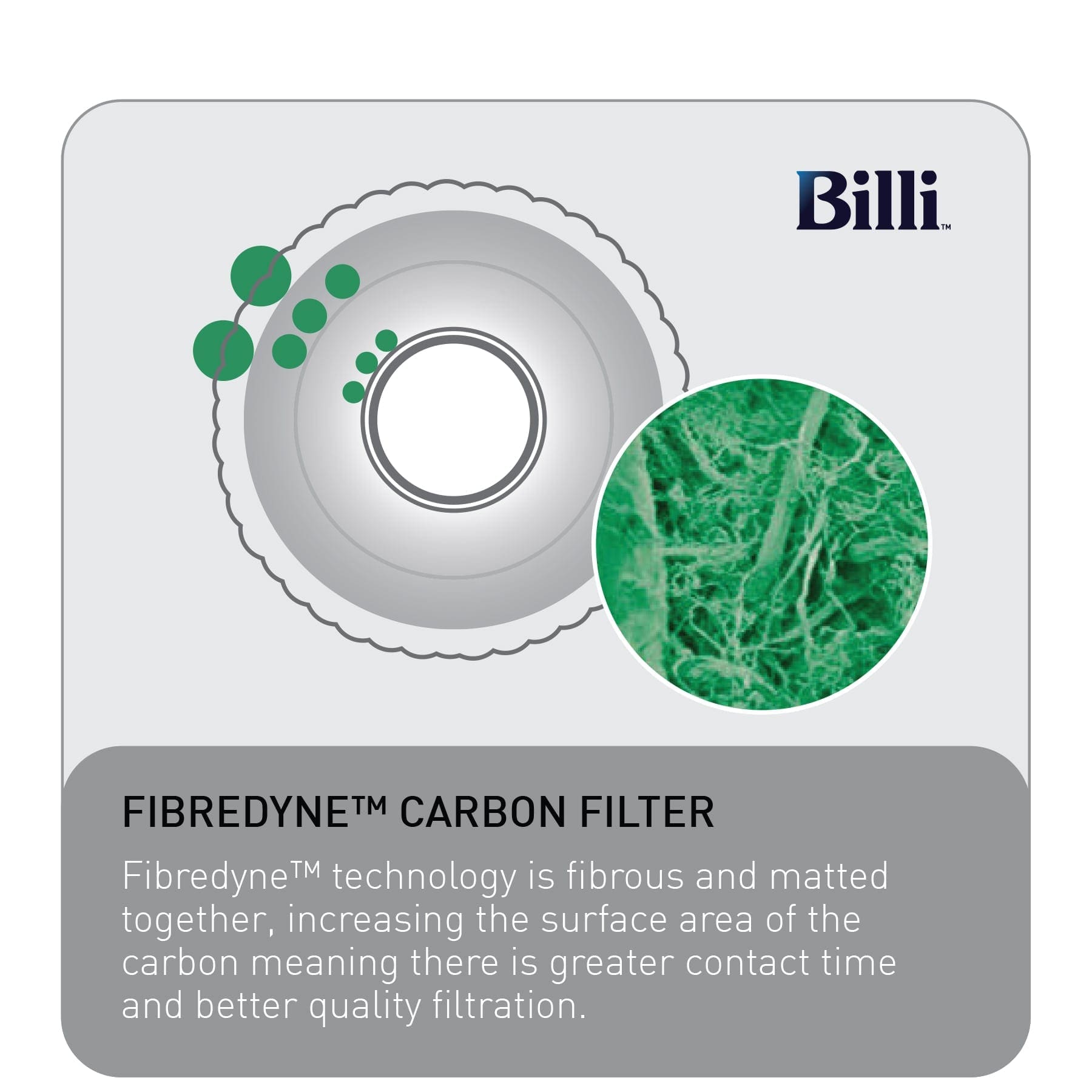
Activated carbon filtration is widely used to reduce chlorine, taste and odour in drinking water. Our premium filters use advanced multi-stage filtration with Fibron X technology, designed specifically to reduce chlorine and organic taste compounds while maintaining performance.
Depending on the cartridge selected, Billi filtration can include:
- Chlorine, taste and odour reduction
- Sediment reduction
- Parasitic cyst reduction
Filtration performance is independently tested and certified to recognised standards, providing assurance that capabilities are verified rather than assumed.
For coffee, the benefit is practical. When chlorine and taste compounds are reduced before brewing begins, fewer external flavours compete with the bean’s natural character. What remains is a cleaner finish and greater consistency from cup to cup.
Tap Water, Jug Filters and Integrated Systems
Many households rely on jug filters. For light, occasional use, they can help reduce chlorine taste. But the differences to an integrated system is consistency.
Standard tap water
- No taste and odour reduction at point of use
- Flavour may vary depending on supply and treatment
Jug filter
- Limited capacity
- Manual refilling
- Countertop storage
- Replacement discipline can be inconsistent
Underbench filtered water system
- Continuous filtered supply
- Integrated into tapware
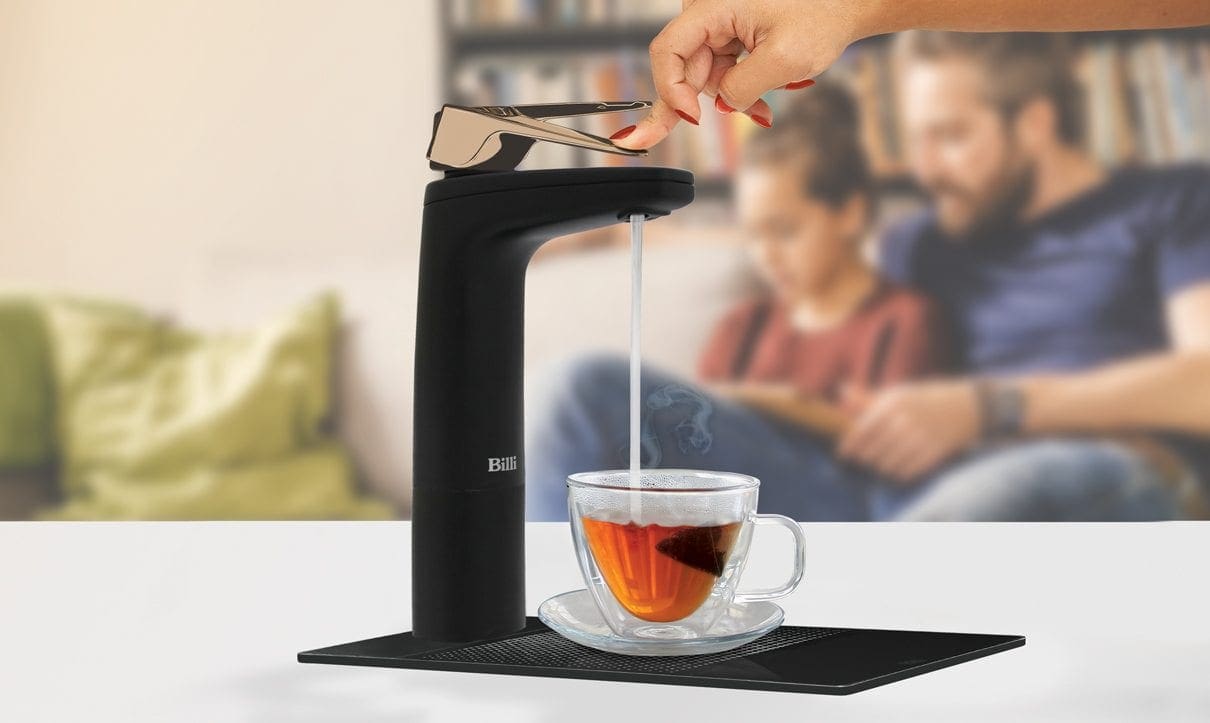
- Instant boiling filtered water for pour-over, long blacks or pre-heating
- Space-saving underbench design
Billi residential systems deliver instantaneous boiling, chilled or sparkling filtered drinking water from a single tap. Many units are water-cooled, meaning no cupboard ventilation is required, and operation remains quiet and efficient.
Brewing Consistency Without Kitchen Clutter
An underbench instant filtered water system reduces visual clutter and simplifies preparation. There is no separate jug on the bench and no need to wait for a kettle to boil. Instant boiling filtered water is available immediately.
Billi systems also incorporate Heat Exchange Technology, reclaiming waste heat energy generated during chilling to support boiling efficiency. Many units include standby modes that conserve energy during periods of non-use.
Designed and manufactured in Australia, our products are built to strict quality standards and supported by a world-class customer service experience.
Common Questions About Filtered Water for Coffee
Does boiling remove chlorine?
Boiling may reduce some chlorine taste, but filtration reduces chlorine and taste compounds before brewing begins. That supports consistency without relying solely on evaporation.
Is New Zealand tap water already safe?
Yes. This discussion concerns flavour refinement rather than safety.
Will filtration remove minerals needed for extraction?
Our filtration is designed to reduce chlorine, taste and odour, along with sediment depending on cartridge selection. It is not positioned as a full demineralisation system.
How often do filters need replacing?
We recommend filter replacement at least every 12 months, with more frequent changes in high-usage or high-sediment areas. Genuine filters include visual reminders and digital lockout features to maintain hygiene and performance.
A Cleaner Cup Starts Before the Grind
If you have focused on grind size, dose and brew time while overlooking the water itself, your experiments have been missing a key factor.
Tap water is safe, but it is not engineered for brewing nuance. Chlorine and taste compounds can compete with delicate notes, and sediment can affect clarity. Activated carbon filtration reduces those interferences so that the character of your beans can be presented more consistently.
To explore a more integrated approach to filtered water at home, view our full range or visit your local Billi stockist to see a Billi system in-person.