Billi Media
Filtered Water Solutions for Healthcare Facilities
Safe drinking water is a fundamental requirement in healthcare environments, where hygiene, reliability, and compliance influence patient outcomes and operational performance. In hospitals, clinics, and aged care facilities, even routine water access must meet higher standards to support infection control protocols and reduce exposure to avoidable risks.
Many facilities still rely on traditional methods that were never designed for modern clinical demands. Systems that depend on stored water, manual handling, or inconsistent delivery can introduce gaps in hygiene and efficiency. As expectations around building health and safety continue to evolve, so too does the need for water systems that perform consistently under pressure.
With decades of experience in instant filtered water systems, Billi designs solutions that prioritise safety, performance, and ease of use across commercial environments. Learn how filtered water systems support healthcare facilities, what features matter most, and how to choose a solution that aligns with both operational and compliance requirements.
Safe water access carries higher stakes in healthcare
Water access in healthcare is part of the infrastructure that supports staff performance, patient wellbeing, and day-to-day operational continuity. Facilities must account for:
- High-frequency use across multiple zones
- Vulnerable populations, including elderly and immune-compromised patients
- Strict hygiene protocols extending beyond clinical treatment areas
Staff kitchens, nurse stations, and shared spaces all rely on consistent water access. When systems fail, the impact is immediate but also cumulative. Delays, additional handling, or inconsistent output can introduce inefficiencies that affect staff workflows and overall facility performance.
Conventional water points can create avoidable risk
Traditional water solutions often introduce challenges that are easy to overlook in busy environments. Common issues include:
- Stored water systems that may sit unused for periods
- Kettles and urns requiring repeated manual handling
- Bottled water creating storage, transport, and contact concerns
- Inconsistent temperature delivery during peak demand
These limitations become more significant in healthcare settings, where hygiene and reliability are essential. Facilities reviewing water safety often begin by reassessing how these systems function in practice. For a broader view of water-related risks, including stagnation concerns, read how Billi systems help reduce the risk of Legionella in high-risk environments.
Healthcare-ready systems need more than basic filtration
Filtration is important, but on its own it does not address the full set of requirements in healthcare environments. A system suitable for healthcare use should combine:
- Fit-for-purpose filtration
- Low-contact or touchless dispensing options
- Safe boiling water delivery with user protections
- Clear maintenance protocols and alerts
- Consistent performance under demand
Without these supporting features, filtration alone cannot meet the operational and hygiene expectations placed on healthcare facilities.
Safety lock features help protect staff and patients
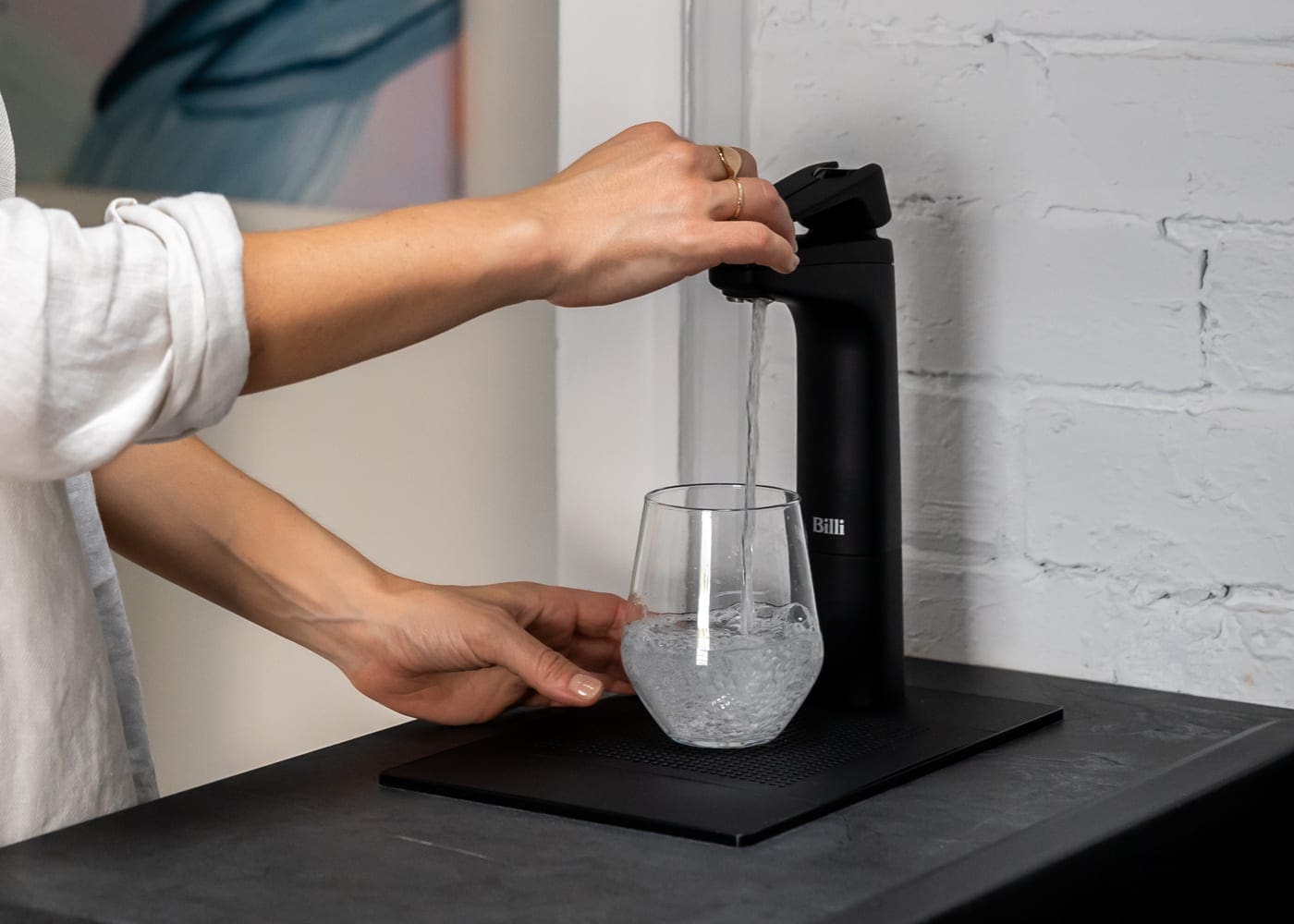
Boiling water remains essential in many healthcare environments, but it must be delivered safely. Billi dispensers include a safety switch that can lock access to boiling water where required. The system returns to safety mode after periods of non-use, reducing the likelihood of unintended dispensing. This feature supports safer use in:
- Shared staff environments
- Aged care facilities
- Multi-user spaces with varying levels of familiarity
Splash-free delivery improves control and usability
Control during dispensing is just as important as availability. Billi’s splash-free delivery regulates water flow as it enters the cup, reducing agitation and limiting splashing. This contributes to:
- Cleaner surrounding surfaces
- Reduced clean-up requirements
- More predictable use in busy environments
In high-demand settings, these small improvements help maintain consistency across daily operations.
Reliable temperature control supports daily healthcare operations
Consistency is essential when water is used frequently throughout the day. Billi systems are designed to provide:
- Boiling water on demand
- Chilled water with adjustable temperatures between 6°C and 15°C
- Stable performance during peak usage
Heat exchange technology supports efficient operation while maintaining consistent output. For staff, this reduces waiting time. For facilities, it provides dependable performance that aligns with operational demands.
Comparing options for healthcare water access
Facilities often evaluate multiple approaches when reviewing water systems.
| Option | Key Considerations |
| Bottled water | Requires storage, handling, and ongoing supply management |
| Kettles or urns | High manual handling and inconsistent availability |
| Standard taps | Limited control over temperature and filtration |
| Instant filtered systems | On-demand delivery, reduced handling, consistent performance |
Instant filtered systems provide a more integrated approach, particularly where hygiene and efficiency are priorities.
Common questions to ask before specifying a system
Is filtration enough on its own? Filtration plays an important role but should be combined with safe dispensing, maintenance, and system design.
Can these systems help reduce Legionella risk? Instant systems reduce reliance on stored water, which may help minimise stagnation risks when properly maintained. For more information, refer to our Australian article on How Billi Systems Reduce the Risk of Legionella.
What maintenance is required? Regular filter replacement and servicing are essential. Systems include alerts to support this process.
Will installation disrupt operations? Billi systems are designed for straightforward installation with minimal disruption, depending on site conditions.
How to choose the right system for your facility
Selecting the right system depends on how the facility operates. Key considerations include:
- Number of users
- Required water types such as boiling or chilled
- Need for touchless functionality
- Installation location
- Filter selection
- Ongoing service requirements
Facilities can explore suitable configurations with the Billi SPEC Generator.
Enquire about safe and reliable healthcare water access
For healthcare facilities, a well-specified water solution supports staff efficiency, reduces operational friction, and aligns with the standards expected in modern healthcare environments. If you are reviewing water access within your facility, this is an opportunity to assess whether your current setup meets those expectations.
To explore suitable options or discuss your requirements, contact our team and learn more about Billi’s commercial filtered water systems.