Billi Media
Designing Accessible Workplace Hydration for DDA Compliance
Inclusive workplace design extends beyond entrance ramps, wide doorways, and accessible washroom facilities to encompass everyday amenities like hydration stations. Commercial breakrooms, office tea points, and public sector kitchens represent shared social hubs where every employee, contractor, and visitor should be able to operate fixtures independently and safely.
Under the Disability Discrimination Act (DDA) and New Zealand Standard NZS 4121 (Design for Access and Mobility), commercial building owners, employers, and interior specifiers hold an obligation to ensure workplace facilities accommodate individuals with diverse physical, sensory, and cognitive abilities.
Standard push-button or digital touch-screen commercial water dispensers often present unintended physical barriers for vision-impaired individuals or workers with limited hand dexterity. Specifying ergonomic tapware with tactile controls, safety mechanisms, and adaptable mounting heights ensures regulatory compliance while fostering an equitable workplace environment.
Understanding Accessibility Standards in Modern Commercial Kitchens
Designing compliant commercial kitchenettes requires aligning spatial layouts with established physical access standards. NZS 4121 outlines specific parameters regarding reach zones, operating forces, and clear approach spaces to guarantee that building amenities remain usable for everyone, including wheelchair users and people with limited upper-body mobility.
Physical reach zones represent a critical design criteria. Controls and water dispensers must be positioned within comfortable forward and side reach ranges, typically between 800mm and 1200mm above finished floor level. Positioning fixtures beyond these dimensions forces wheelchair users to overextend or risk tipping, while placing controls too close to rear splashbacks creates awkward approach angles.
Operating force requirements are equally stringent. Tapware handles and push mechanisms should require minimal force to activate, preventing strain for users with arthritis, reduced grip strength, or limited fine motor control. Standard twist valves or stiff mechanical levers often fail these criteria.
Visual and tactile contrast requirements ensure that vision-impaired individuals can locate and differentiate controls safely. Smooth, uniform touch-screens or monochromatic push-buttons lack physical feedback, making it difficult for users with low vision to distinguish between ambient, chilled, and boiling water options. Providing distinct tactile indicators, high-contrast colour coding, and clear physical lever positions fulfils universal design principles across commercial breakrooms.
Overcoming Barriers for Vision and Mobility Impaired Users
Conventional commercial water dispensers frequently feature sleek, flat digital displays or uniform push-buttons that prioritise minimalist aesthetics over universal functionality. While visually appealing, these designs introduce significant operational friction for workers with sensory or physical impairments.
Flat touch-screens provide no physical tactile landmarks, leaving vision-impaired users unable to identify control locations through touch alone. Operating digital displays often requires direct visual confirmation, creating confusion and increasing the risk of accidental boiling water discharge. Furthermore, stiff mechanical levers or recessed buttons require substantial finger pressure and pinching motions, creating barriers for individuals with arthritis or motor control difficulties.
Boiling water delivery introduces serious safety considerations in accessible environments. Standard boiling taps can deliver water at high pressure or with irregular flow, causing splashing as hot liquid enters a cup. For a wheelchair user seated at bench height, splashing boiling water poses an elevated risk of severe scalds to hands, arms, and lap areas.
Addressing these barriers requires replacing flat interface panels with purpose-built ergonomic tapware. Purpose-engineered dispensers incorporate tactile feedback, position-sensitive levers, splash-free electronic delivery, and automated safety timeouts to ensure that every user can pour hot and cold beverages confidently and without risk.
Billi XL Levered Dispensers with Braille Indicators and Tactile Controls
To meet the rigorous demands of universal accessibility, Billi engineered the specialised XL Levered Dispenser range. Purpose-designed for high-use commercial, government, and healthcare environments, the XL Levered series combines position-sensitive operation with intuitive physical feedback.
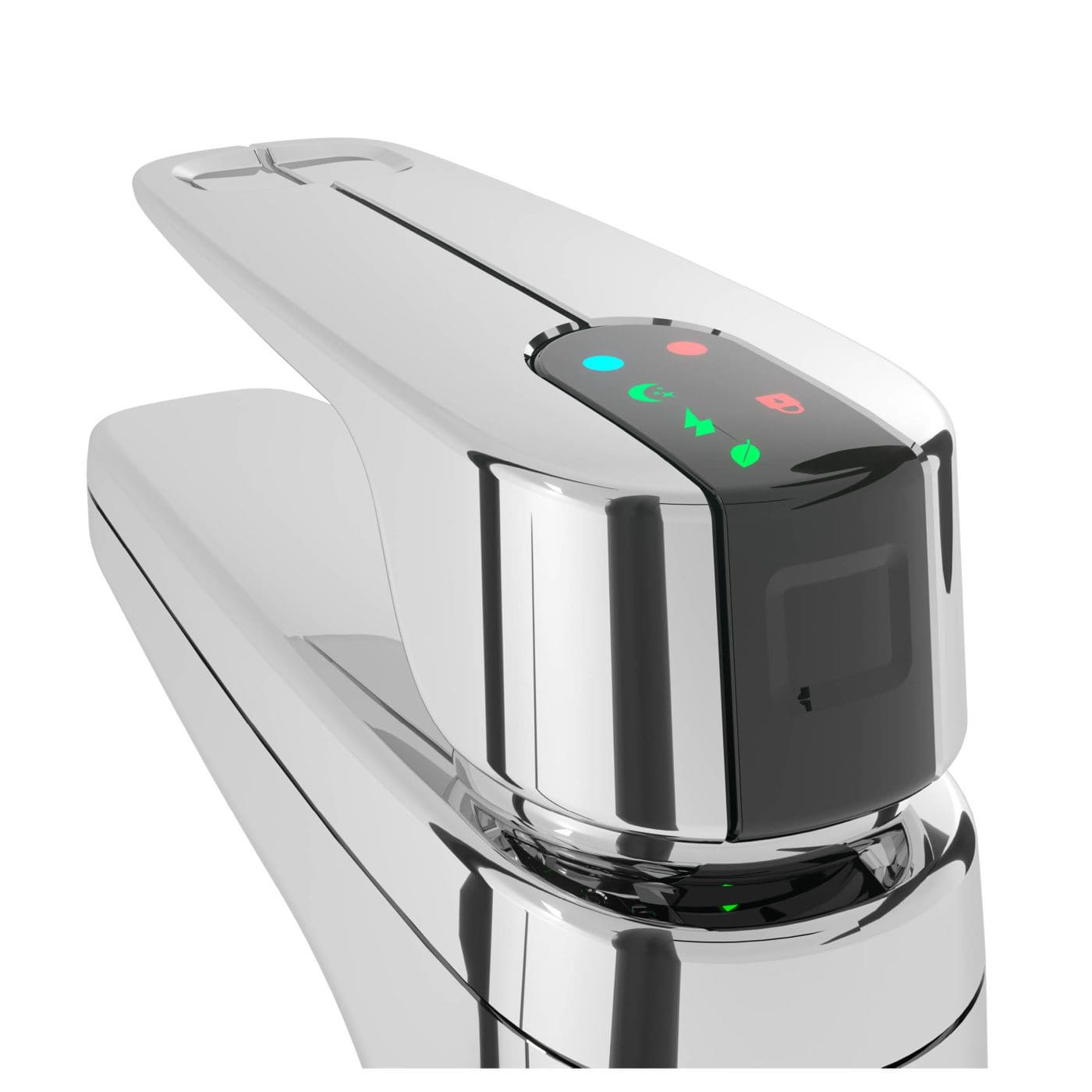
The XL Levered Dispenser features extended, ergonomically contoured levers that require minimal force to operate. Users can activate water flow using a palm, wrist, or forearm, accommodating individuals with limited finger dexterity or hand strength. The position-sensitive levers provide immediate visual and physical confirmation of operational status, moving clearly to signal active flow.
For vision-impaired applications, Billi offers specialised colour-coded levers with integrated Braille indicators. The red boiling lever and blue chilled lever incorporate raised Braille lettering on the lever pad surface, allowing vision-impaired users to identify water temperatures instantly through touch. High-contrast red and blue colour coding provides clear visual distinction for individuals with low vision or colour blindness.
Safety features are seamlessly integrated into the dispenser design. All boiling water models feature an electronic safety switch that locks off boiling water delivery until intentionally disengaged. A red lock icon demonstrates when the safety switch is active; touching the sensor switch releases the lock and enables boiling delivery. The system automatically reverts to safety mode after a period of non-use, eliminating burn risks in public or shared office environments. Furthermore, Billi splash-free technology electronically varies water flow upon activation, ensuring smooth, controlled delivery that prevents splashing.
Benchtop Ergonomics for Wheelchair Access Using Fonts and Risers
Ensuring full wheelchair accessibility requires addressing the physical relationship between tapware height, benchtop depth, and knee clearance under the counter. When installing water dispensers in accessible breakrooms, mounting fixtures over standalone drainage fonts provides superior spatial ergonomics compared to positioning taps over standard deep sink bowls.
Billi Font and Riser systems allow dispensers to be mounted flush against the benchtop surface, connected to a stainless steel drainage grid and waste pipe. Removing the deep sink basin allows the cabinetry below to be configured with clear knee and toe space, enabling wheelchair users to make a direct front approach to the water dispenser without obstruction.
Riser extension modules further enhance benchtop ergonomics. Available in 70mm and 120mm heights, risers raise the dispenser outlet to accommodate tall water bottles, carafes, and travel mugs easily. Raising the dispenser spout height reduces the need for users to bend forward or reach awkwardly, improving posture and usability for both standing and seated individuals.
For specialised layouts where controls must be separated from the dispense column, the Billi XR Remote Dispenser offers an ideal solution. The XR Remote configuration separates the operation panel from the water outlet, allowing the control pad to be mounted along the front edge of the benchtop or at a custom height that optimises wheelchair reach. For high-security or critical care environments, including aged care, healthcare facilities, and supervised commercial settings, specifiers can also integrate specialised safety dispensers with remote controls, such as the Billi Eco with Safety Dispenser. This configuration combines a robust, secure dispense spout with remote button activation positioned at accessible reach heights, eliminating scalding risks and accidental operation while ensuring effortless access for users with limited mobility.
Specifying Accessible Hydration for Your Workplace
Incorporating accessible, DDA-compliant drinking water dispensers into commercial workplace designs protects employee safety, ensures building code compliance, and reinforces an inclusive organisational culture. By combining ergonomic XL Levered tapware, Braille indicators, splash-free boiling delivery, and adaptable font mounting configurations, specifiers can create hydration amenities that serve all users equally.
All Billi commercial systems are designed and manufactured in Melbourne, Australia, and comply with AS/NZS 4020, AS 1428 Accessibility Design Requirements, and WaterMark standards (WM-21525 and WM-21882). Systems are certified under HACCP PE-972-WAT-1-02 for hygienic commercial operation and hold Gold Level Global GreenTag certification.
Architects, interior designers, and access consultants can explore complete technical drawings and specification options on the Billi Commercial Range.
To configure accessible tapware options, risers, and finishes for your next project, utilise the interactive Billi 3D Build portal or contact the Billi NZ team for tailored specification assistance.